Step-by-Step Guide to Using AI Content Detector
Step-by-Step Guide to Using AI Content Detector
Authenticity concerns have grown significantly as AI-generated content continues to fill online platforms across every major industry. Verification has become a necessary step for writers, educators, and content creators who need confidence in the origins of their texts. Distinguishing human writing from machine-generated material goes beyond manual review and calls for specialized analysis. The online AI Content Detector addresses this need through advanced pattern recognition and fast, dependable verification.
This guide walks through each step of the process so users get accurate results from the start. Once familiar with the workflow, checking content for AI patterns becomes a quick and consistent part of any professional routine.
Understanding AI Content Detection
The browser-based detection technology identifies AI-generated text through pattern analysis and linguistic evaluation.
The tool examines word choice, sentence rhythm, and document-level patterns throughout the submitted content. It then computes metrics for perplexity, burstiness, and lexical variety to catch unnatural repetition and pacing. Those metrics get compared against human writing samples and standard AI model outputs:
- Detection covers all major AI language models and their outputs
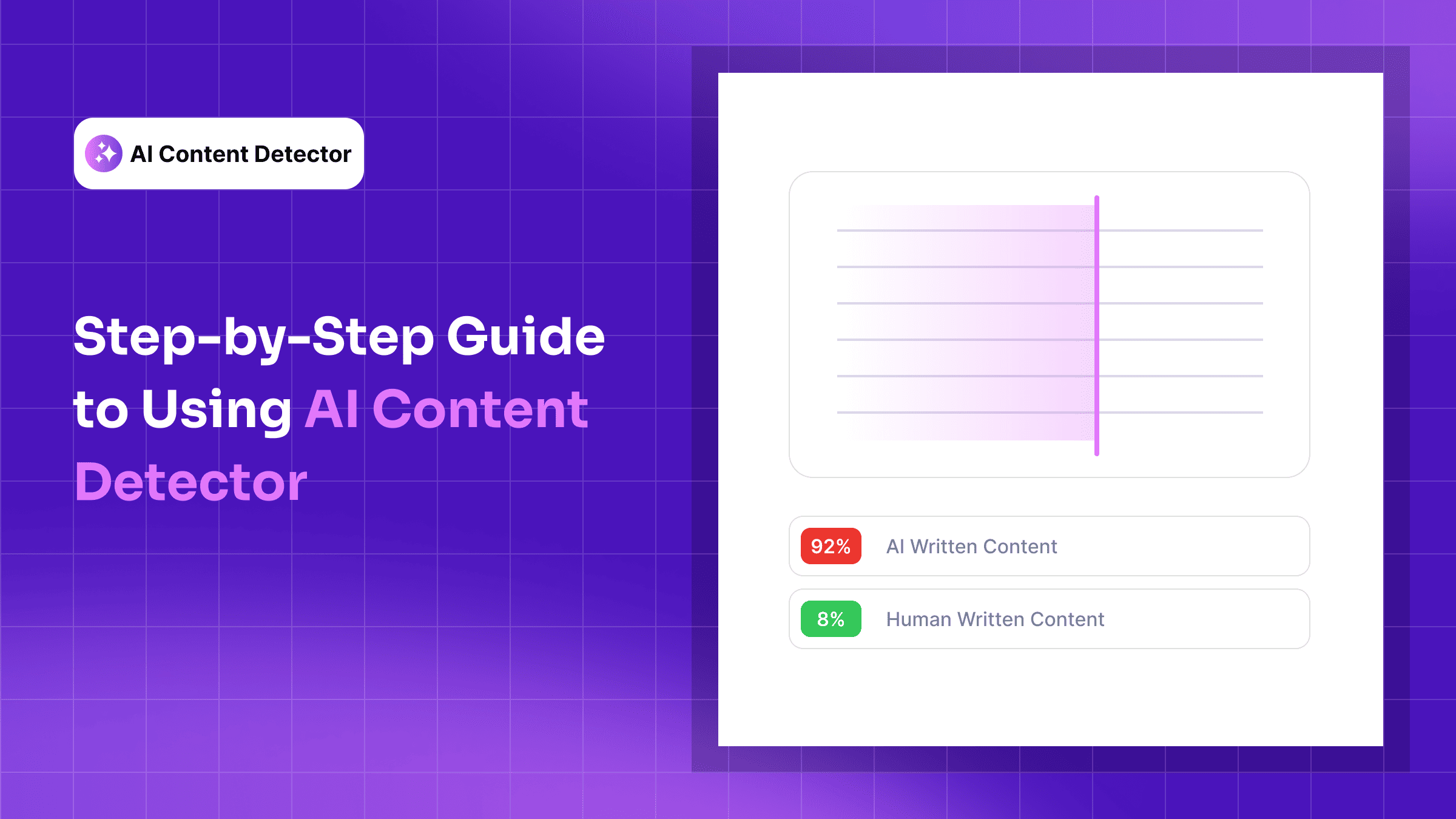
- Results display percentage scores that reflect AI likelihood
- Highlighted sections pinpoint specific AI-generated portions
- Spanish, French, and several other languages are supported for multilingual content
Accuracy on this platform sits above 99.9% when identifying AI content patterns. Results appear within seconds once a document goes in for analysis.
How to Use AI Content Detector Step by Step
A clear sequence makes the detection process straightforward from the first submission to the final report. Here is how to use the tool effectively:
Access the Platform
Open the AI Content Detector in any web browser without downloads or installations. Desktops, tablets, and phones all load the tool without compatibility issues. No account or login stands between a user and their scans.
Prepare Your Content
Copy the text from your document or editor before submitting. For those who prefer file uploads, save the content beforehand so it is ready to go. The platform supports both methods, keeping the process flexible across different workflows.
Submit Text for Analysis
Drop the copied text into the input box on the homepage to get started. The upload function sits alongside it for anyone working with document files instead. Once content is entered via either method, the same analysis process is applied.
Start the Detection
Click the “Detect AI” button to begin once the content is in place. The tool starts examining patterns as soon as the scan initiates. For longer documents, progress indicators display analysis status, making tracking straightforward throughout.
Review Detection Results
Once processing completes, examine the detailed results displayed on screen. The platform shows an overall percentage score that reflects AI likelihood across the full content. Specific sentences or paragraphs get highlighted based on detection confidence levels.
Download Your Report
As soon as the review is complete, use the download option to save the full detection report. It contains highlighted text alongside corresponding AI percentages, which makes record-keeping straightforward. The report can be easily shared with colleagues, clients, or supervisors for verification. Note that report download is a premium feature on this platform.
Best Practices for Accurate Detection
Getting the most from this AI content detector requires a few consistent habits when content goes in for analysis. Here they are:
Submit Complete Text
The detector performs best when full documents or substantial portions go in together. Isolated sentences offer fewer patterns to evaluate, whereas complete articles or essays give the algorithm a much stronger basis for accurate results.
Check Multiple Sections
For lengthy documents, sending different sections separately, along with a full scan, helps locate specific problem areas. Comparing section scores against the overall result gives a clearer picture of where AI usage is concentrated within the content.
Interpret Results Carefully
Percentage scores reflect the probability rather than absolute certainty of AI-generated content. Results serve best as guidance alongside personal judgment and content knowledge. Borderline scores deserve closer manual review before any firm conclusions are drawn.
Keep Records
Saved detection reports serve as clear evidence of authenticity checks for important documents. Downloaded reports are useful whenever questions about content origins arise later, particularly in academic or professional settings where documentation carries weight.
Who Benefits from AI Detection?
Various professionals find value in using the online AI content Detector for different verification purposes.
Teachers validate originality in student assignments and academic papers submitted. Editors verify content authenticity before publication in journals or websites. Similarly, journalists ensure articles are free of AI influence before publishing. Bloggers check content portions to maintain quality and avoid search engine penalties. And recruiters accurately differentiate between human-written and AI-generated application materials.
Wrapping Up
The AI Content Detector provides a clear, reliable path to content verification through systematic analysis. Submit the text, review the highlighted results, and save the reports for documentation once the scan is complete. The tool delivers higher accuracy across AI patterns from major language models. Understanding how to read scores and following consistent practices ensures effective use across any professional context. Regular checks help maintain content authenticity and integrity across all written work.