AI Detection Tips for Students, Writers, and SEOs

Three different groups are dealing with the same problem right now. Students submit work that gets questioned before the results even come back. Writers produce content that editors review with growing suspicion. SEOs watch pages underperform even though they meet every technical requirement. What connects all three situations is the growing presence of AI-generated text across spaces where human writing was once the only option. Knowing how to spot it has become a practical skill with real consequences attached. This guide covers the indicators that matter most.
Why AI Detection Matters?
Different fields feel this pressure differently. The stakes vary by context, but the core need remains consistent across all three groups below:
For Students
Academic institutions treat AI-generated submissions as integrity violations. Flagged work carries consequences ranging from grade penalties to formal disciplinary review, depending on institutional policy.
For Writers
Similarly, editorial teams now review content with greater scrutiny than before. Work that reads without natural variation or genuine voice raises concerns that affect publication decisions and professional standing.
For SEOs
Search platforms increasingly factor content quality into their performance metrics. Material lacking genuine depth or human specificity risks underperforming regardless of how well other optimisation elements are handled.
Tips to Detect AI-Generated Content
Several reliable indicators separate AI output from genuine human writing. The sections below cover what to look for and how each pattern reveals itself:
Repetitive Sentence Patterns
Sentence construction across a full piece tells a lot. AI models produce text with a consistent rhythm throughout. Lengths remain similar, structures repeat, and transitions occur at predictable intervals with little variation.
On the contrary, human writing breaks that rhythm naturally. Some sentences run long. Others cut short without warning. Paragraphs shift weight in ways that reflect genuine thought rather than optimized output.
A few specific signs worth checking:
- Subject-verb-object construction dominates most sentences
- Transition words appear at similar intervals throughout
- Paragraph lengths stay consistent from section to section
- No sentence ever feels genuinely unexpected or off-rhythm
Content displaying all four tendencies together rarely reflects natural human composition.
Lack of Depth or Original Insight
Surface-level coverage is one of the clearest signals. AI output presents widely available information without adding anything genuinely new to the conversation.
Human writers bring perspective shaped by actual knowledge and real engagement with a subject. That depth shows through unexpected angles, specific details, and positions that carry some conviction.
Content that thoroughly covers a topic but never says anything beyond what a basic search already reveals often reflects generation rather than genuine writing. The accuracy stays intact. The coverage feels complete. Nothing original appears anywhere. That absence is itself a signal worth taking seriously.
Overly Polished but Vague Language
This pattern is subtle but consistent. Generated content reads smoothly, carries proper grammar throughout, and sounds professional at a glance. Closer reading reveals something different:
- Sentences sound meaningful but dissolve under scrutiny
- Explanations circle a point without landing on anything concrete
- Conclusions restate earlier content without adding resolution
- Professional tone stays perfectly consistent from start to finish
Parallel to this, the real writing carries qualities that break that polished surface. Specific word choices feel occasionally unexpected. Opinions surface in ways that interrupt smooth flow. Moreover, genuine uncertainty appears when a writer works through something complex. Vagueness without any of those qualities is a reliable indicator worth taking seriously.
Absence of Specific Examples
Real writers draw from concrete details that reflect genuine engagement with their subject. AI output stays general, using placeholder examples that feel illustrative rather than specific.
Content that explains concepts clearly but never grounds them in anything verifiable tends to reveal its origins through that absence alone. Specific detail carries weight that a general explanation cannot replicate convincingly.
Using a Detection Tool
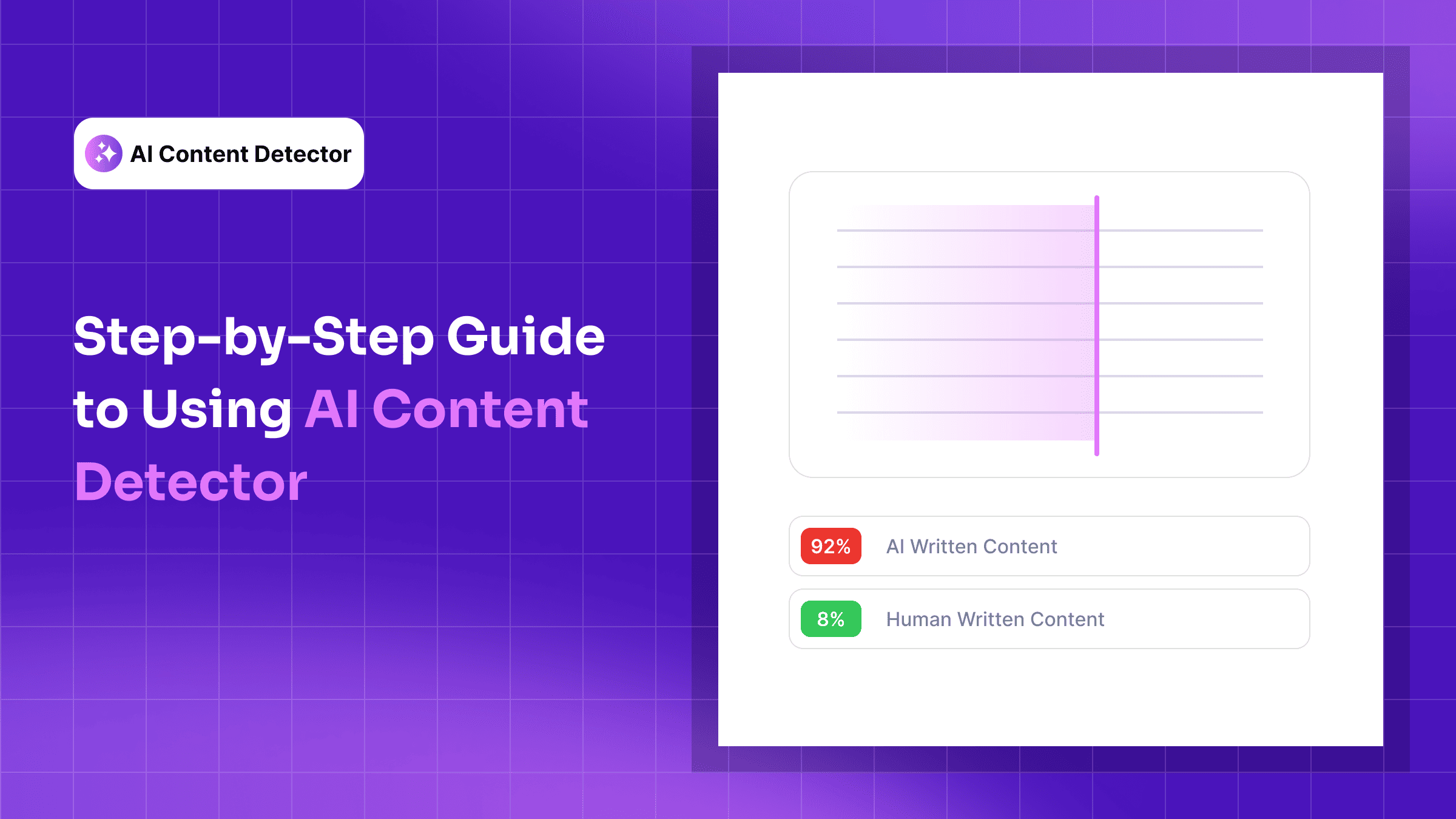
Running content through an AI content detector provides a direct assessment alongside manual review. It analyses text for statistical patterns, structural regularities, and language distributions that trained models consistently produce.
The detector returns a probability score, with highlighted sections flagged as likely to be generated. Results work best as one indicator among several rather than a definitive conclusion on their own. Combining tool output with the manual indicators above produces a more reliable overall assessment than either approach delivers independently.
What to Do After Detection?
Detection rarely ends the process on its own. What follows depends heavily on the context, who reviews the finding, and what standards apply in that particular setting.
In Academic Settings
Institutional guidelines determine the next steps after flagged submissions. Reviewers typically follow established procedures rather than making independent judgments about intent or outcome.
In Editorial Contexts
Teams assess whether the revision adequately addresses the concern or whether a full replacement better meets publication standards. That decision usually depends on how much of the content triggered concern during review.
In SEO Work
Search performance often reflects content quality before any manual review happens. Pages built around generated text tend to lack the specificity and depth that stronger content carries naturally. Replacing or revising flagged material with something more grounded usually produces steadier results over time than leaving existing content untouched.
Capping Off
Three groups, three different stakes, one shared need. Structural patterns, surface-level coverage, and polished vagueness each point toward content that reflects generation rather than genuine human composition. Pairing manual awareness of those signals with tool-based review gives students, writers, and SEOs something concrete to work with. Catching these indicators early keeps problems from developing into situations that take far longer to address.